The Man From Mars
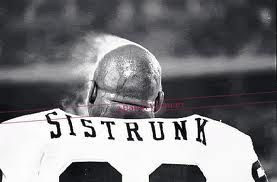
On Monday night, September 16, 1974, in Alex Karras's first broadcast in the Monday Night Football booth, an ABC camera found the Oakland Raiders bench in Buffalo and held on a bald, 6-foot-4 defensive tackle with steam coming off his head (Bleacher Report). Karras said what millions of viewers would repeat for the next fifty years: "That's Otis Sistrunk. He's from the University of Mars" (Raiders.com).
It was a joke with a real story underneath it. The Raiders' program listed Sistrunk's school as "U.S. Mars," shorthand for the United States Marine Corps (Wikipedia). He was, as Karras knew, the only active player in the league who had never played college football (The Seattle Times).
Most Sistrunk stories start that night. This one starts five years earlier, at Foreman Field in Norfolk, Virginia, with the Continental Football League.
No Scholarship, No Shortcut
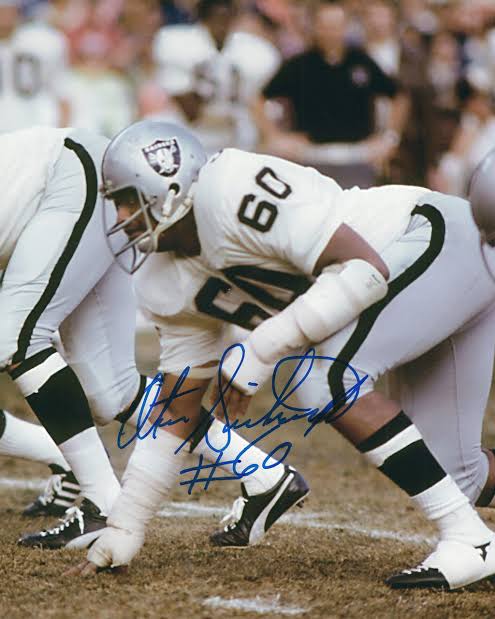
Sistrunk grew up in Columbus, Georgia, and played at William H. Spencer High School. When he graduated, there was no recruiting letter and no college roster. He went into the Marines (Wikipedia).
After his discharge, at 21, he was cutting meat at a plant in Milwaukee. In 1967 he joined the West Allis Racers of the Central States Football League, a semi-pro club in the Milwaukee suburbs, and earned All-League honors at defensive tackle that fall. The Racers were removed from the league after the season for financial shortcomings. A new West Allis club, the Spartans, took its place in 1968, and Sistrunk came back for a second year (Fun While It Lasted). Pro Football Journal's review of the record lists him as a league All-Star both seasons (Pro Football Journal).
That was the ceiling of local football in Wisconsin: working men playing on weekends after a full week on the job. It wasn't a path to the NFL. For Sistrunk, the next step was a higher league.
The Call to Norfolk
He told the story himself, years later, without much ceremony.
"I played in the Continental League in Norfolk Virginia," Sistrunk said. "I had a friend who called me and told me they were looking for players and that I should try out. I told him I was more interested in basketball but I tried out and made the team" (Steelers Takeaways).
The team he made was one of the best-run clubs in minor-league football. The Norfolk Neptunes had started as the Springfield Acorns of the Atlantic Coast Football League and moved to Norfolk when the Continental Football League formed. They played at Foreman Field on the Old Dominion campus. Over their history they drew 574,481 fans to 47 home games, about 12,223 a game, the best per-game average in minor-league football history at the time. In 1969, the season Sistrunk arrived, they averaged more than 13,000, over twice the league average (Wikipedia).
That matters to this story. Norfolk wasn't a sandlot. It was a real pro football town with real crowds and real pressure on the players, and a defensive tackle from a semi-pro league in Wisconsin had to earn his place there.
The 1969 Season
The Continental Football League's final season was its biggest. The league added the eight-team Texas Football League, split into four divisions, and moved its headquarters from San Jose to Indianapolis (Wikipedia).
Norfolk played in the Atlantic Division. Under head coaches Gary Glick and George Hughes, the Neptunes went 8–4 and scored 366 points, the most in the division, while allowing 224. They finished second to the Orlando Panthers, who went 10–2 and took the division's playoff spot (Wikipedia).
Sistrunk wore No. 76 and played left defensive tackle. The season record credits him with two interceptions for 37 yards and a touchdown, rare production for an interior lineman (Pro Football Archives). He wasn't the only Neptune on his way somewhere: Nelson Munsey, who joined the club in 1969, was later drafted by the Baltimore Colts (Wikipedia).
Sistrunk later said the league stayed with him. "The things I learned playing in the Continental League carried over to the NFL of course," he said (Steelers Takeaways).
When the League Ended
The original Continental Football League didn't survive the winter. After the 1969 season, nine of its remaining clubs left; five formed the Trans-American Football League and four, Norfolk among them, joined the Atlantic Coast Football League (Wikipedia).
Sistrunk stayed with the Neptunes. In 1971 he went to training camp with Washington and was released on August 4. He went back to Norfolk, was named to the Official All-ACFL team (Pro Football Archives), and helped the Neptunes win the 1971 ACFL championship over the Hartford Knights (Wikipedia).
A release from an NFL camp ends a lot of careers. Sistrunk's response was a championship season and an all-league honor. Three seasons in Norfolk had turned a semi-pro tackle into a player the NFL would have to look at again.
The Trade
In 1972 the Los Angeles Rams signed him (Pro Football Archives). They had reason to take the chance: Coy Bacon, who won the first Continental Football League title with the 1965 Charleston Rockets, had become a Pro Bowl lineman in Los Angeles. According to Pro Football Journal, the Rams saw a lot of Bacon in Sistrunk (Pro Football Journal).
The problem was depth. "They had a lot of guys there. Fred Dryer, Merlin Olsen…they had too many good guys on the defensive line there," Sistrunk said. Head coach Tommy Prothro talked with him for about 30 minutes and "told me he was trading me because he thought I could make the Raiders team" (Steelers Takeaways).
Oakland had watched him in a joint workout. Pro Football Journal reports the Rams let the Raiders choose from four defensive linemen who weren't sure to make the roster, and Oakland took Sistrunk (Pro Football Journal). The trade went through on July 31, 1972, for a draft pick (Pro Football Archives).
He knew what he was up against. "The biggest adjustment was just knowing I had to work harder than everyone else to make the team," he said. "If a guy who played in college worked 100%, I had to go at 110%" (Steelers Takeaways).
Silver and Black
He made it. "The highlight of my life was when I first made the team," Sistrunk told The Seattle Times. "I can still remember the day. I was a grown man hollering, 'Yes!' and the defensive line coach then said, 'You'll be starting'" (The Seattle Times).
He started all 14 games as a rookie at left tackle (Pro Football Archives). Sacks weren't an official statistic yet, but Pro Football Journal's review of the gamebooks credits him with 13 in 1973 and 13.5 in 1975 (Pro Football Journal). He was named to the Pro Bowl and second-team All-Pro in 1974 (Wikipedia).
On January 9, 1977, at the Rose Bowl, the Raiders beat the Minnesota Vikings 32–14 in Super Bowl XI. Sistrunk got to Fran Tarkenton twice. "We had to treat the Super Bowl like work," he said. "Just another day on the job. Just go out do your work, win and go home" (U.S. Army). The Army's account calls him the first NFL player to win the championship without going to college.
He played seven seasons and 98 games, all for the Raiders, before a knee injury ended his career (Wikipedia; The Seattle Times). During his years in Oakland, the Raiders went 75–23–2 (U.S. Army).
Back to the Service
Life after football didn't start smoothly. Back home in Georgia, by his own account, he was "letting myself go" until two Raiders teammates, Art Shell and Gene Upshaw, sat him down at a charity event. "They helped turn my life around," he said (The Seattle Times).
After a short run in professional wrestling, he went to work for the Army. He coached and ran the fitness center at Fort Benning for about 14 years, then moved to Fort Lewis in Washington, where he became the stadium manager (U.S. Army). He worked with Special Olympics and wounded warriors and spoke at schools. "It's not part of my job," he said. "It's part of my honor" (U.S. Army).
His message to students was the same one his career proved. "I used to tell them if I could get into the NFL having not gone to college, that anything is possible" (The Seattle Times). He also told them to stay in school.
In 2022, Columbus honored him by naming his street after him (Wikipedia), and the Georgia High School Football Hall of Fame included him in its first class (Valdosta Daily Times).
Why It Matters
Bill Walsh's season in San Jose showed the original Continental Football League as a place where a great coach first ran his own team. Otis Sistrunk shows the other half of what the league was for: players who didn't fit the usual path.
There was no college film on him and no draft slot. There was a Marine Corps discharge, a meat-plant job and two seasons of weekend football in Wisconsin. What got him to Oakland was a league good enough to test him, a club good enough to draw real crowds, and three seasons of proving it.
That is the People's League. Today's Continental Football League plays professional outdoor football from May through July, finishing before NFL training camps open. It's built for players who earned their way onto the field, for the towns that fill the stands, and for working people who know what a full shift feels like. And it keeps the standard the original league learned the hard way: no club joins without a written commitment, a paid deposit and compliance with league standards.
The University of Mars had one graduate. His road to the Super Bowl ran through Norfolk, in the Continental Football League.
Further Reading
- Otis Sistrunk career record — Pro Football Archives
- Exclusive with Former Raiders Defensive Lineman Otis Sistrunk — Steelers Takeaways
- Otis Sistrunk happy in life after Mars — The Seattle Times
- Otis "My Man" Sistrunk — Pro Football Journal
- Norfolk Neptunes — Wikipedia
- Before the Genius: Bill Walsh's Forgotten Season in the Continental Football League — CoFL Features (Legacy Series Part 1)
- The First Ones In — CoFL Features
Additional Article Sources
- The 8th Round: How three undrafted Raiders forged paths to Pro Bowls and Super Bowls — Raiders.com
- 'Just another day on the job' for former NFL great, JBLM stadium manager Otis Sistrunk — U.S. Army
- Former NFL player considers Soldiers his third family — U.S. Army
- West Allis Spartans — Fun While It Lasted
- 1969 Continental Football League season — Wikipedia
- Otis Sistrunk — Wikipedia
- A History of Monday Night Football — Bleacher Report
- Georgia High School Football Hall of Fame holds first induction ceremony — Valdosta Daily Times


